
Bikes on buses in Tasmania
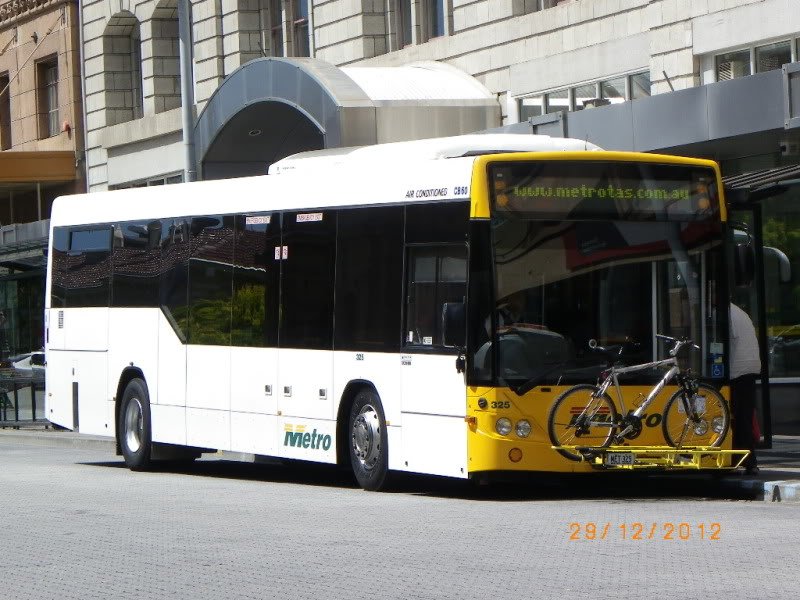
Image: Metro Tasmania bus #325 fitted with a bike rack during public testing days. Credit: Neil Robins
Introduction
Over the last twenty years, there have been attempts to integrate active mobility and public transport in Tasmania. Across Australia, it is not common to see bicycles carried on regular public buses, while bikes on buses in Tasmania is even less common. In other states and territories, trains and road coaches have the space for carrying bikes, aiding their integration into the transport network. Every state or territory allows folding bicycles to be placed onboard, while the A.C.T has had bicycle racks on buses for years. Here I take a look at what happened with trials of bikes on buses in Tasmania.
In the late 1990s and early 2000s, bicycles could be carried on certain regional coaches. Tasmanian Redline Coaches carried bikes at an apparent charge of $6.00, and Hobart Coaches would also take bicycles. This has not been confirmed. The only service that regularly carried bicycles was the Hobart Airporter, when it used Toyota Coaster mini-buses with a trailer attached. There is also little information about private operators across the state, however, the services operated by Metro Tasmania are well documented.
Mountain Bike Service
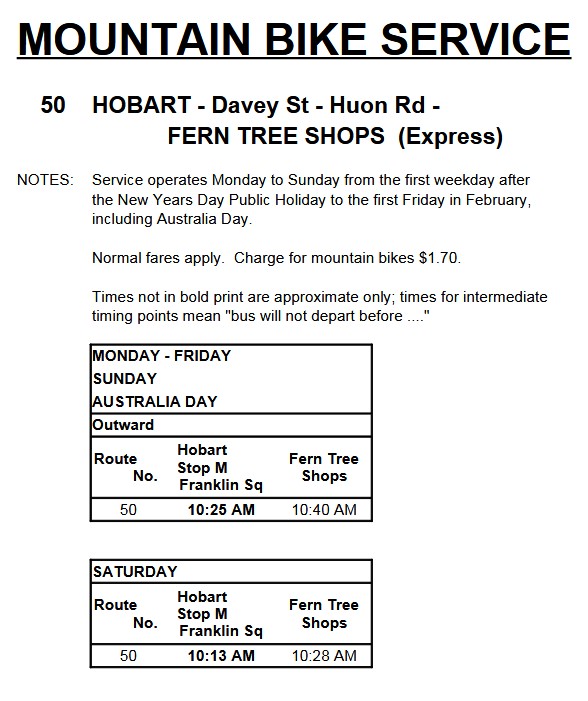
On January 2nd 2003, a special “Mountain Bike Service” was introduced by Metro Tasmania and the Wellington Park Management Trust, which allowed riders to carry their bikes on a bus. The new Route 50 service was operated by an already existing bus in the Metro fleet, #129, which had had its front seats removed and straps installed. This was used on a special Clifton Beach “Surfer Service” which started in 2002. The new Mountain Bike Service operated for a one month trial concluding on February 7th. The bus departed Franklin Square Stop M at 10:25am every weekday, excluding the Australia Day public holiday, and ran express to the Fern Tree shops. Up to eight bikes could be carried on board, and normal fares were charged with bikes costing $1.40 one way. The bus also had copies of the “Wellington Park Mountain Bike Map” for sale from the driver for $2.00. When the service started on January 2nd, the only passenger was the president of Bicycle Tasmania, Tim Stredwick. While no further information was published about its performance, the service made a return in 2004.

Once again the service operated as a summer trial from the first weekday after the New Years Day public holiday, to the first Friday in February. This time the service operated Sunday to Friday at 10:25am, and Saturdays at 10:13am. The additional services were made following feedback from the previous trial. The service continued in this configuration until February 2009. During this time, the price of carrying bikes increased to $1.60 in 2005, $1.70 in 2006, and $1.90 in 2008. In April 2007, the Hobart City Council paid to reinstate the service for the month on a trial basis. Once the service ended it appeared that the specially-designed bus, #129, was disposed of in the following year. While the Mountain Bike Service ended, it would not prevent initiatives to carry bikes on buses.
Getting on board
The idea of bikes on buses was being considered in the halls of parliament. During the estimates committee on sport and recreation in June 2008, Tasmanian Greens leader Nick McKim raised the idea of putting bike racks on buses to encourage commuter cycling. Labor member Michelle O’Byrne supported this and also emphasised end-of-trip facilities in workplaces. Liberal member Sue Napier cited issues with public liability and road safety in other cities that had installed bike racks on buses. Bikes were again reiterated by McKim in October 2009, when integrating cycling and buses was recommended in the Kingston and Environs Transport Study. The Greens’ policy was for increased cycling and bus integration through bike racks at stops, bike lockers, and improved bus shelters. McKim also raised the potential for bike racks on buses. This would become relevant when Metro was scrutinised by parliament in December 2009.


Credit: Australian Greens
During scrutiny, Greens member Tim Morris asked Metro about the success of the Fern Tree mountain bike “trial”. Minister for Infrastructure Graeme Sturges outlined the government’s position that it supported any initiative to integrate bicycle travel with buses. Metro CEO Heather Haselgrove said that the trial was unsuccessful, and very few cyclists used the service. She recounted a meeting with the Fern Tree Community Association who were keen for Metro to reintroduce a bicycle option.
Metro were investigating two options – a model based on Canberra’s ACTION which placed bikes vertically against the front of the bus, or a European-style internal “butcher’s hook” behind the driver. Haselgrove said that the Canberra model was limited to two bikes, and she was concerned about time delays from passengers loading and unloading bikes. School children might also be deterred because the driver was unable to leave their seat to assist. Metro were considering bike lockers or bike cages at park and rides, and highlighted examples in Perth. Liberal member Jeremy Rockliff highlighted Brisbane’s system of bicycle parking as a good example. The first bike racks on buses would soon be seen around the streets of Hobart.
Pedalling to trial
There were shifting winds in the political landscape when the Tasmanian election was held in March 2010. The parliament was hung, with Labor and the Liberals both winning ten seats each. The remaining five were held by the Greens, and neither side wanted to make a deal. Labor was given a mandate by the Governor and were able to form a government with the Greens in support. Nick McKim was elevated to the ministry as part of the deal, and became Minister of Sustainable Transport. One of his first endeavours was to request Metro to investigate the trial of bike racks, which would be limited to ten buses. The first fitting of a bicycle rack was observed on Bus #325 at the Springfield depot in June 2010, which would be the only bus to conduct testing. It would not be until December that a temporary permit was issued to enable bike racks on the road.
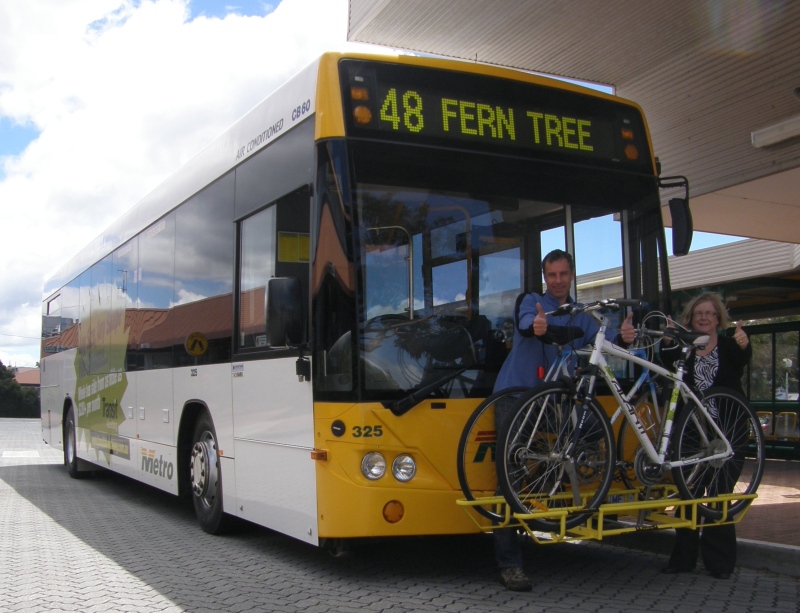
On December 12th, 2010, Nick McKim and Heather Haselgrove launched the trial of bike racks on buses, enabling Metro to carry out testing, route assessments and driver training. The trial would last for six months until June 2011. The routes under assessment were Hobart to Fern Tree, Hobart to Kingston via the Southern Outlet and Channel Highway, and Hobart to Camelot Park/Tranmere. The trial would cost $17,000 for ten bike racks, and did not include driver training and operating costs for buses. One purpose of the testing was to seek potential opportunities where cyclists might ride downhill in the morning to work, and then use a bus to return uphill in the evening. Questions were raised in The Mercury at the announcement with readers suggesting bike racks obscured the view of drivers, and were a hazard to pedestrians. Heather Haselgrove responded that the same design was used successfully in Canberra, and depending on the test, a full 12-month in-service trial would occur. In March, Nick McKim went on to relaunch the bike racks in the media. He also announced an additional $150,000 funding for active transport infrastructure, including lockers, showers, and storage to encourage more cycling. The news of funding was welcomed by Bicycle Tasmania, but not by the state opposition who criticised the increasing debt in budgets.
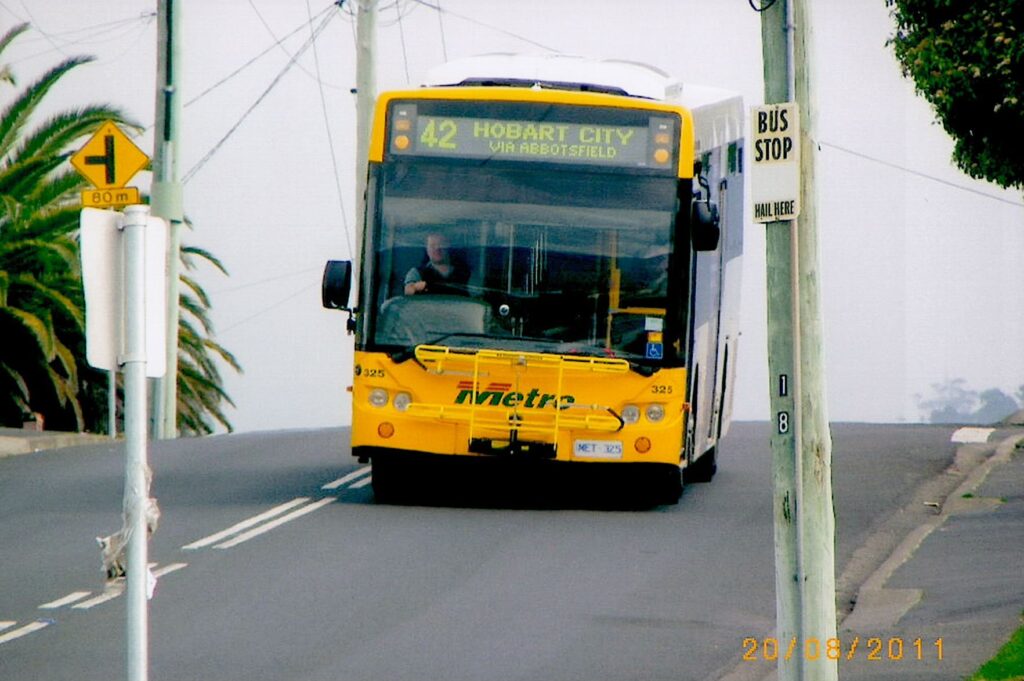
Owing to the Global Financial Crisis and increasing costs to the government, Liberal opposition leader Will Hodgman used his budget reply in June 2011 to criticise the bike racks, saying that a Liberal government would fund teachers and nurses instead. Hodgman also wrote in The Mercury that a Liberal government would make budget savings by cutting park and rides, wi-fi, and bike racks from government initiatives. The same argument was used by Peter Gutwein in November when he criticised the government for budget blowouts, and pursuing Wi-Fi and bike racks on buses. Not long after this, Metro placed the trial on hold, following concerns raised by the Rail, Tram, and Bus Union (RTBU).
Union worries
Nick McKim told the government businesses scrutiny committee that following the successful trial, Metro approached the RTBU in June 2011 to discuss introducing bike racks on buses. The union raised concerns about driver liability if a bike fell off and hit a pedestrian or vehicle. According to McKim, no issues were brought up by other jurisdictions where the same model of bike rack had been installed, however, there were potential legal issues identified in the Vehicle and Traffic (Vehicle Operations) Regulations 2001 about failing to properly secure a load. RTBU branch secretary Samantha Simonetis and Metro CEO Heather Haselgrove both commented that the legal liability issue was not easily removed. Liberal transport spokesperson Matthew Groom used the issue to criticise a lack of priorities by the government, and a failure to deliver essential services. As a result of the legal liability concerns, the trial was put on hold.
Bus and Bike trial
There were rumours in October 2012 that the bike rack trial was going to start again. The remaining bike racks began to be fitted to other buses at Metro, with buses #320-#329 all receiving the racks. In December 2012, Metro formally announced the Bus and Bike trial.

Between December 30th, 2012, and February 2nd, 2013, a trial of bike racks was conducted on three routes in Hobart. The purpose of the trial was to determine the suitability of the services, any operational issues, and how services and operations could be improved if the services were to be made available on an ongoing basis.
Bike racks were available for use on selected services and routes, at designated stops only. They were:
Route 45 – Huon Road to junction of Strickland Avenue
Route 48 – Fern Tree via Huon Road (to junction of Strickland Avenue only)
Route 615 – Camelot Park via Rosny Park and Shoreline
The map below shows the stops where bikes could be loaded and unloaded onto buses.
These routes were identified due to their popularity, and potential opportunities for usage. The Eastern Shore service was considered because of the limitations for cyclists using the Tasman Bridge. A timetable was introduced on the Metro Tasmania website specifying which services would be operated by bike-carrying buses, however due to the short period of the trial, I have not been able to source it. Unlike the previous Mountain Bike Service, bikes could be carried free of charge.
Come and try sessions were held at the following locations and times, during the Christmas and New Year break. Metro publicised them on their Twitter account.
Thursday 27 December 2012
10.15am to 11.00am Bus stop N Franklin Square (Macquarie Street)
11.25am to 12.10pm Bus stop 7 Davey Street Hobart (outside 272)
12.20pm to 1.00pm Huon Road/Strickland Avenue junction
Saturday 29 December 2012
11.00am to 12.00pm Bus stop B Hobart Interchange (Elizabeth Street)
12.25pm to 1.10pm Bus stop 33 Tranmere Road (Camelot Park Terminus)
Bike rack limitations
As mentioned already, each bike rack could take a maximum of two bikes. They were available on a first-come, first-served basis. If the bike rack was full, riders had to wait for the next Bus and Bike service. The bike rack was suitable for single rider, two-wheel bikes with a wheel size of 20 inches (510mm) or larger. They were suitable for road bikes, hybrid bikes, mountain bikes, and teen bikes. Various bicycles could not be carried, including motorized cycles, tandems, tricycles, and small children’s bicycles. Also prohibited were bikes with baby seats, front fenders, tyres wider than 3 inches (75mm), front mounted horizontal racks or front mounted baskets. Bike handlebars could not extend more than 42 inches (1050mm) from the front of the bus, or be locked to the bike rack. The rules were rather stringent, owing to the safety risk, rack design, and liability issues faced by Metro.
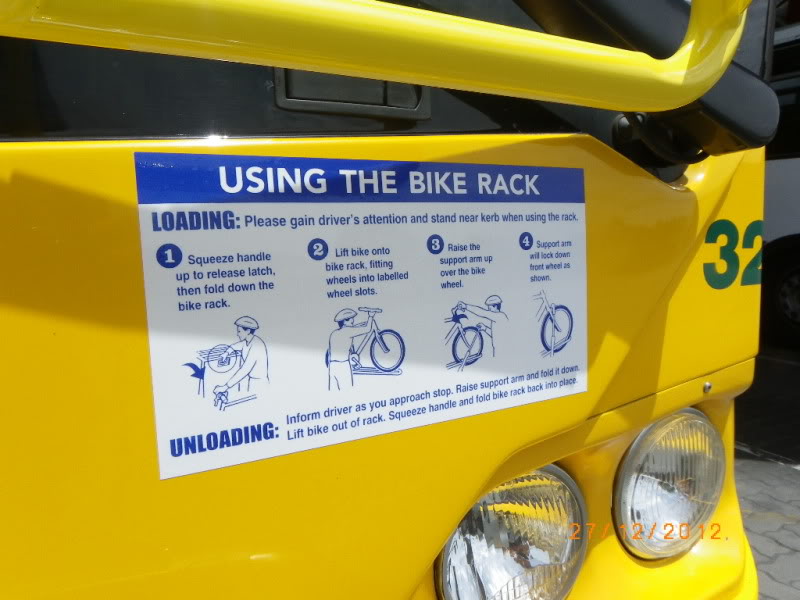
Passengers used bike racks at their own risk, and Metro assumed no responsibility for lost, stolen, or damaged bikes, or bikes left on racks. Riders were responsible for loading, securing and removing bikes, and the bus driver could not leave the bus to assist passengers. Children aged 12 or under required an adult with them to put the bike in the rack, and under no circumstances were bikes carried inside the bus. Drivers could also refuse to carry bikes due to unsafe conditions. There was also no guarantee that a scheduled service used a bike rack-fitted bus, depending on operational requirements.
Trial outcome
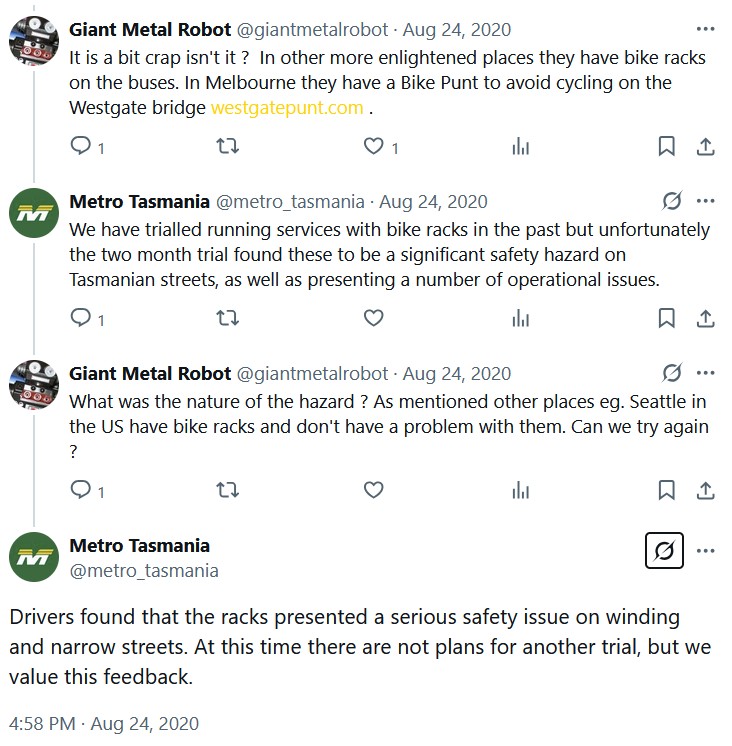
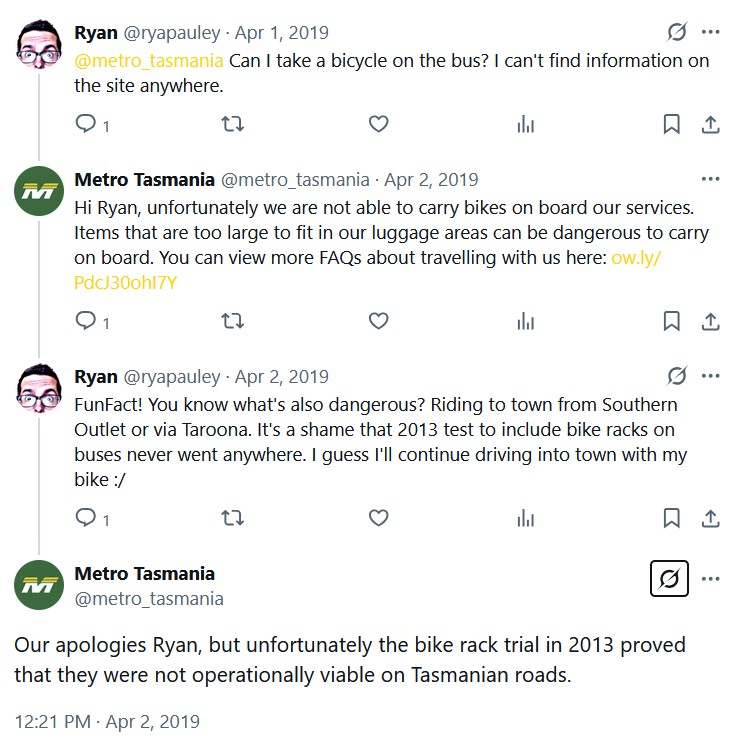
The Bus and Bike trial was limited in its efficiency and practicality. It ended on February 2nd, with all bike racks removed the following day. There was little mentioned about the trial results in the media or by Metro itself. Nothing was publicised in the Annual Report, nor was it raised in parliamentary scrutiny. Other issues took precedence throughout the year, including a pay dispute and strike action by unions, and the trial of the Turn-Up-and-GO corridor on Main Road. Interestingly, in recent years Metro responded to queries on Twitter regarding the bike racks, and why they were unsuccessful. Street design and safety issues were cited. There has been no figures for how many used the service.
Riding the waves
In 2021, the Tasmanian Government introduced a trial of a ferry connecting Bellerive and the Hobart waterfront. Bicycles are able to be carried on board at no extra charge, and allows riders to bypass the narrow and precarious pathways on the Tasman Bridge. The larger vessels used on the service now accommodate bike parking racks.
Conclusion
The Metro bike trial was not successful because to its limited coverage, poor public perception, and liability issues. The next couple of years were plagued by pay disputes and strikes, while the Liberals were elected to power in 2014. The politicised nature of the initiative, as well as the lack of bipartisan support for improvements to public transport, was the nail in the coffin for the project. Reportedly, the ten bike racks were taken off the buses and ended up at the Glenorchy tip. While there have been increasing improvements in active transport across Tasmania, this has been primarily made through infrastructure, with bike lanes, shared paths, and other treatments that help riders. There has not been as public of a campaign since the last trial to integrate bikes and buses.
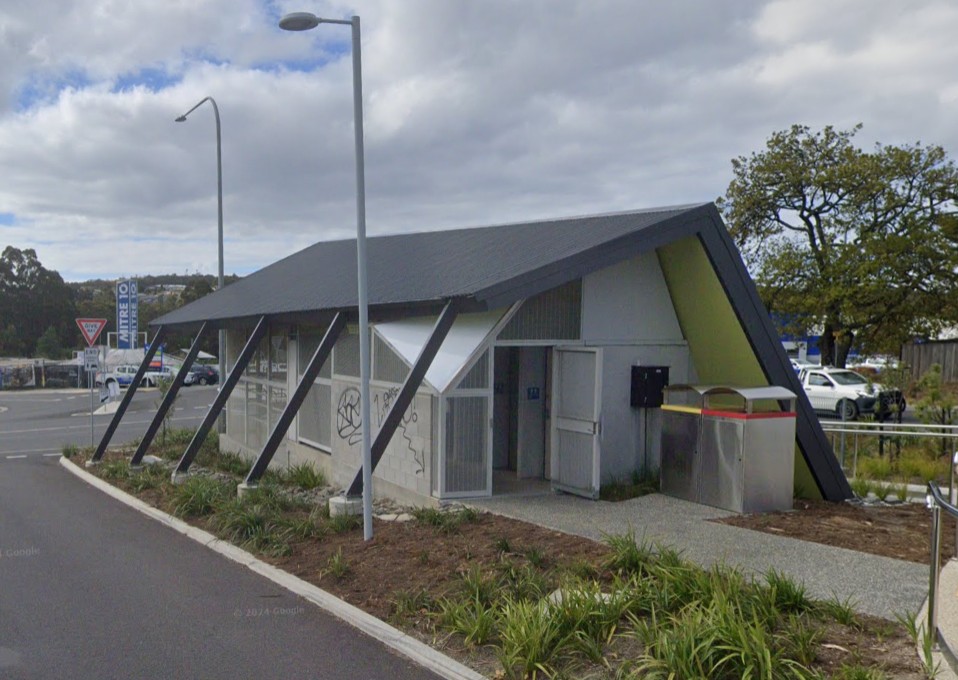
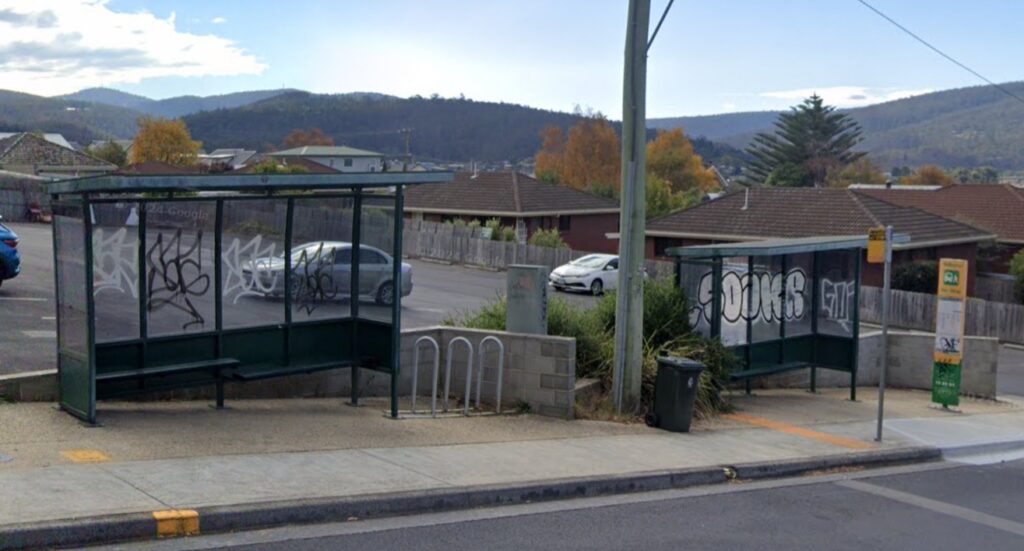
This is an opportunity gap which should be explored, though it may not be with bike racks on buses. Lockers or storage bins at key transport interchanges would help commuters complete multi-modal trips. These are presently available at Moonah, Huntingfield, and Kingston Park and Rides. These may also provide a commercial opportunity for councils, with rental fees for the use of some storage facilities. It was a bold plan to introduce bike racks on buses, and with increases in cycling, bridging the gap between active and public transport will benefit everyone on the road.
Assistance with information
If any reader has any further insights into the trial, or has any other services which could be referred to or explored, please let me know in the comments section below.
References
Images are used with permission by their photographers, and images from Metro Tasmania are used under fair use for educational purposes.
The bulk of this article has been compiled through analysing Mercury articles from 1996 to 1998, and from the Tasmanian Parliament’s Hansard.
Specific references will be added at a later time, however, if there are any questions please feel free to reach out and I will gladly help clarify. There are simply too many references to list in such a short amount of time.
Kinetic provide straps for up to 2 bikes on the Hobart/ Launceston route for $10. It’s a great service although suggest arriving 45m early to get to the head of the queue before other luggage gets in the way.