
End of suburban rail a lesson for Hobart’s proposed BRT
Written in January 2025
Fifty years since the end of Hobart’s suburban rail service, its legacy and the future of the city’s transport network continues to divide public opinion.
There are important lessons which can be learned from the demise of rail services, especially for future transport projects like the Northern Suburbs Transit Corridor which plan to reshape the city and reinvigorate public transport.
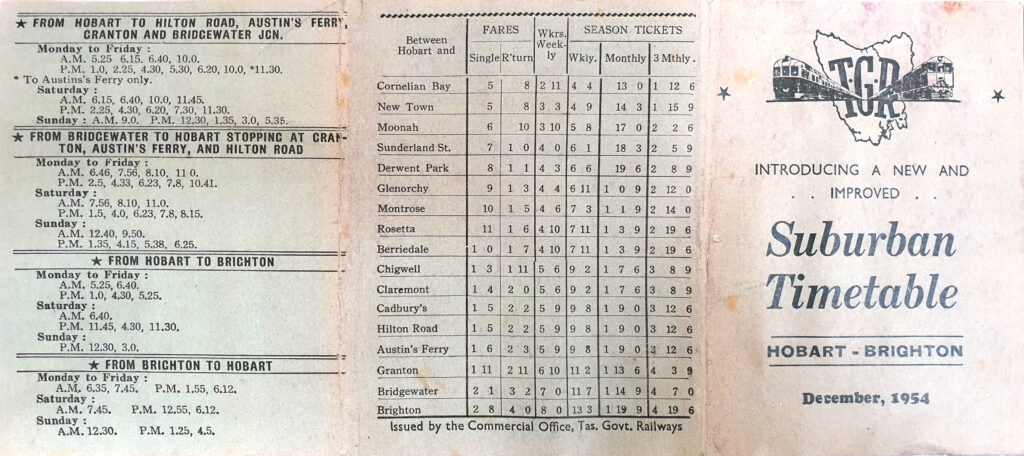
Following the Second World War, Hobart’s trains carried nearly two million passengers a year, making up around two-thirds of all passenger rail traffic in Tasmania. Newer diesel trains and a revamped Hobart station inspired confidence in the future.
In September 1953, a review by a British rail expert recommended that Hobart suburban trains should be expanded while the rest of the state’s trains should be removed.
This led to the highest ever frequency of trains in Hobart, and the introduction of the Tasman Limited to rationalise country services in 1954. Suburban passengers reached a zenith of 2.5 million trips out of a total 3.29 million statewide.
The creation of the Metropolitan Transport Trust (MTT) in 1955 took Hobart’s trams and buses into government control, when statewide tram and bus patronage was over 23 million journeys.
In 1960 the most patronised railway stations in Tasmania by outgoing trips were Hobart (572,000), Moonah (238,000), Claremont (225,000), Derwent Park (218,000) and Glenorchy. (163,000), excluding special trains.
Many of these trips largely came from the city’s industries, whose workers were the breadwinner for suburban rail. Trains to the Zinc Works and Cadbury factory were heavily patronised.
The MTT operated in direct competition with the railways. Integration between buses, ferries, and trains was not desired, citing that passengers did not want to interchange between modes.
With a lack of coordination, patronage dwindled, and services were cut. The Transport Commission started replacing off-peak trains with buses in 1962 and removed passenger ferries in 1963.
The Hobart Area Transportation Study of 1965 planned a future city with freeways and a bypass. It also recommended the removal of suburban trains completely which hastened their demise.
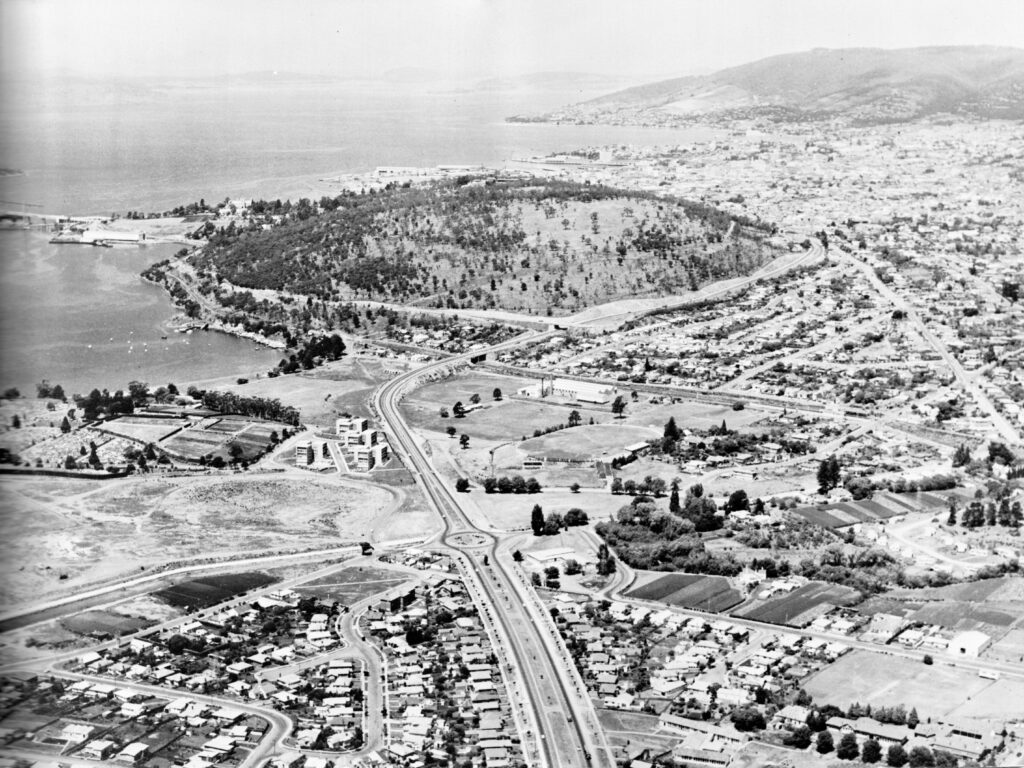
Source: Wilbur Smith & Associates 1965
Further cuts were made in the late 1960s with overall demand for public transport decreasing, and more investment in roads, higher car ownership, and suburban expansion. Rail patronage fell by just over 50% from 1954 to 1964.
The 1974 Royal Commission on Urban Transport criticised the duplication of services. Even with cheaper fares than buses, the impact of service cuts, lack of capital works like station upgrades, and failure to integrate the network severely affected the railways’ bottom line.
In twenty years, suburban trains fell from their height. The last train terminated after midnight on New Years Day 1975.
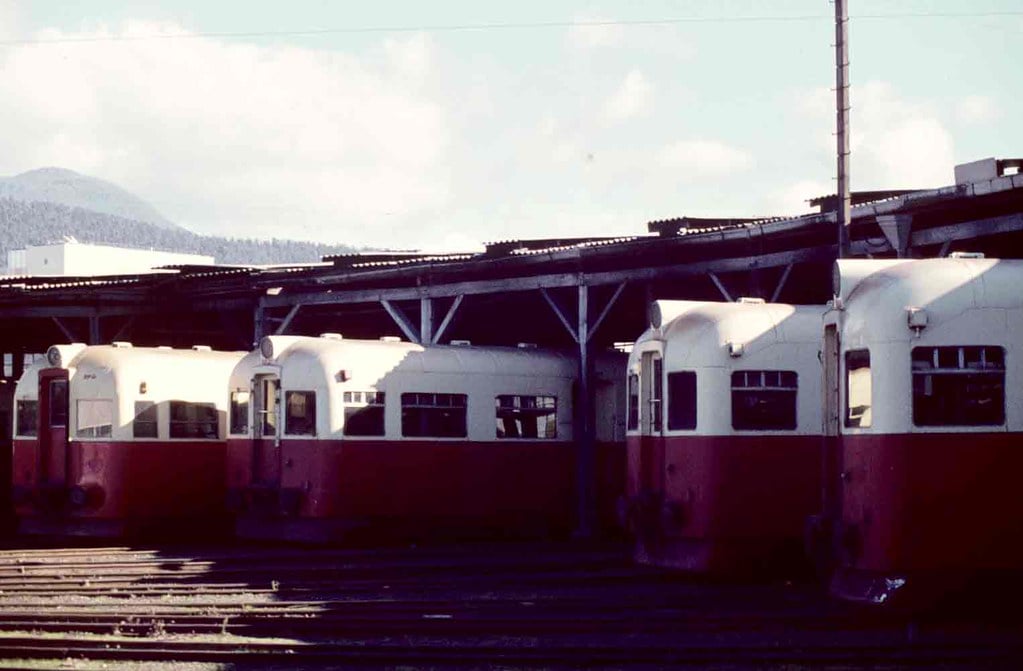
15 May 1975. Credit: Melanie Dennis
The demise of rail should have taught that duplication, competition, and lack of service, frequency and investment are detrimental to a public transport service. Some of these issues still affect public transport in Hobart, and today’s transport projects need to avoid the failures of the past.
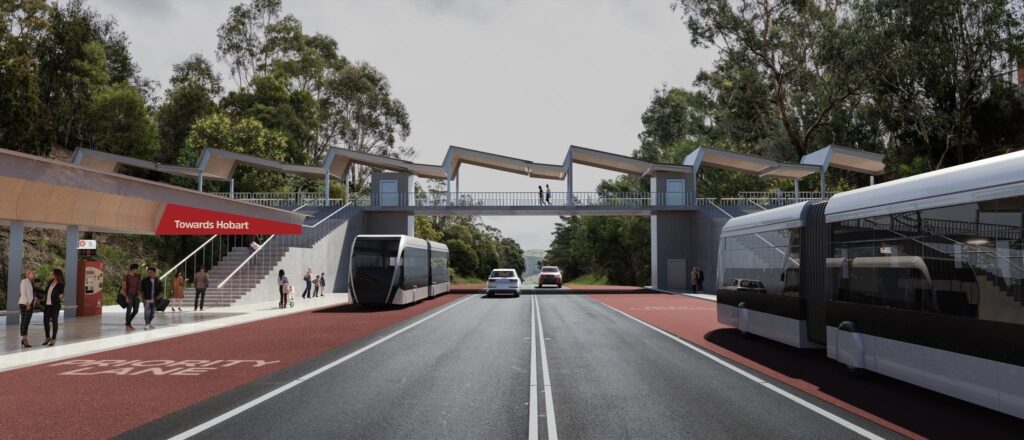
The estimated $445-million-dollar bus rapid transit (BRT) network aims to revitalise public transport and increase growth along the Northern Suburbs Transit Corridor, while balancing trade-offs between coverage across Greater Hobart and providing a frequent service.
When Metro’s “Turn-up-and-Go” high frequency corridor along Main Road began in 2016, it finally returned service levels which trams had once operated in the 1950s. The value this added was not capitalised on for changing land use, density growth or improving infrastructure.
The 2023 Greater Hobart Household Travel Survey shows 4.3 per cent of people using public transport each day. There is a need for quick wins and low-cost opportunities. If the potential benefits of a rapid bus network can be achieved for less, then every option should be explored.
Increasing public transport investment so that existing services can be more efficient, operating at more times with more priority, may deliver far greater benefits. There should never be a reduction in service levels.
The proposed BRT network connecting Kingborough, Glenorchy and Clarence via Hobart already exists disjointedly. Simple network changes and infrastructure upgrades can deliver journey time savings, reduce interchanges, influence land use growth, and create benefits for the community.
The desired outcome remains the same whether it is buses, trains, light rail, or ferries – To increase uptake in public transport, density around transport hubs, and social opportunity to ensure that businesses and communities can thrive.
Whatever the future holds, without understanding the past, increasing public transport use requires an appreciation that these problems have occurred before, and foresight is necessary to ensure that Hobart’s transport network does not repeat the same mistakes again.